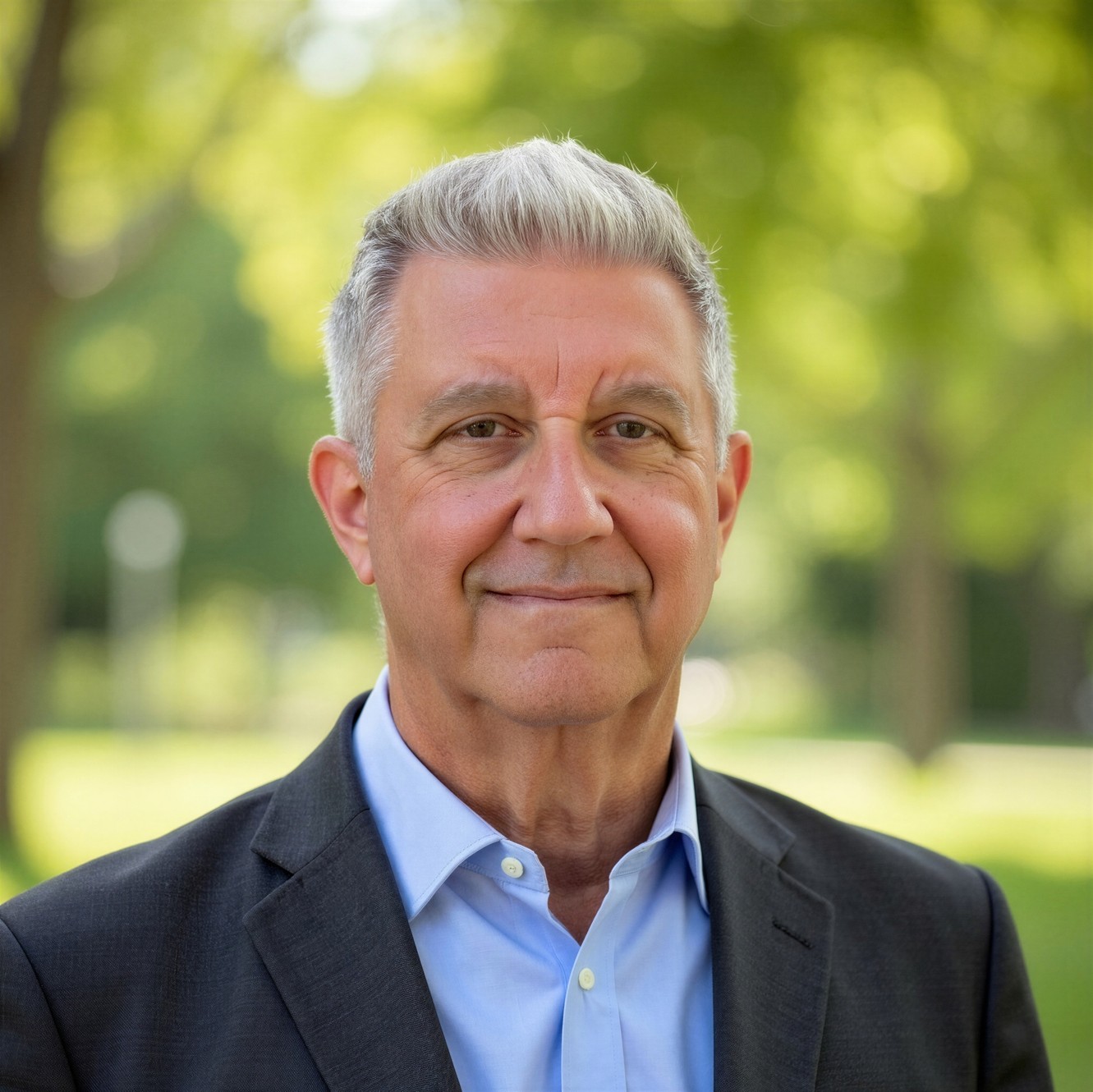
Jeffrey Cleveland
Session Speaker
Jeffrey Cleveland is an economics lecturer and Ph.D. candidate in Space Resources Economic Policy at the Colorado School of Mines, where he is an adjunct professor in the economics of space resources. A frequent conference speaker, Mr. Cleveland is also on the faculty of Howard Community College (Maryland), where he has taught since 2012. In addition, he serves as Chief Space Economist for several early-stage firms, helping them refine and advance their service offerings for the space economy. In the burgeoning field of space economics, his research and writing interests lie in developing macro- and microeconomic policies for cislunar space, and defining long-term economic development policies for a solar system-wide economy. Mr. Cleveland received his MA in Economics from the University of Detroit Mercy, where he was inducted into Alpha Sigma Nu, the honor society of Jesuit universities recognizing scholarly achievement. He also has two degrees from the University of Maryland, a Bachelor of Music and a Master of Business Administration."
Can We Achieve Economic Sustainability in the Space Economy? Abstract: As space activity expands beyond the historical model of government-led missions, a fundamental question is emerging: Can the space economy achieve economic sustainability? Recent years have produced rapid growth in launch cadence, declining launch costs, private investment, and commercial participation, but high rates of growth do not inherently imply sustainability. U.S. and global space-economy data tell a mixed story, while real-world experience demonstrates that remarkable technological achievements do not necessarily translate into sustainable economic outcomes. Thispresentation therefore examines what economic sustainability means in the context of space and what conditions may be necessary for technically successful activities to become durable economic activity. To address this question, the presentation introduces a multi-dimensional framework consisting of seven interrelated elements: Financial, Technological, Temporal, Environmental and Resource, Legal, Ethical, and Constituent sustainability. The framework is tested against real-world examples including launch reliability, lunar landing outcomes, space companies entering public markets through SPACs, dual-use technologies, infrastructure-oriented cislunar business models, and evolving government procurement approaches. Collectively, these examples suggest that long-term sustainability will depend not simply upon technological progress, but upon market mechanisms, investment, institutional arrangements, governance structures, and stakeholder support that align incentives across extended time horizons. Finally, the research advances beyond the framework toward Framework → Process → System, using Situational Awareness to observe sustainability at both macroeconomic and individual-firm levels. A proposed Measure-Metric-Measurement (MMM) approach provides a pathway toward scorecards capable of assessing present-state sustainability and informing future decisions. This interdisciplinary perspective is particularly relevant as scientific discovery creates new technological possibilities: scientific advancement enables engineering to create new capabilities, and engineering determines what can be built. But economics determines what gets built…and what will continue to get built.