Quantum Universe 2026: Quantum Science, Astrophysics & Fundamental Physics
Virtual September 8, 2026
Theme: Advancing Quantum Science, Astrophysics & Fundamental Physics for the Future of the Universe
"All registered participants of Scientific Research Conferences 2026 will receive a Certificate of Attendance accredited with 10 CPD Credits"
About the Conference
Quantum Universe 2026 brings together leading scientists, researchers, academicians, and industry professionals from across the world to explore groundbreaking developments in quantum science, astrophysics, and fundamental physics.
This conference provides a global platform for knowledge exchange, collaboration, and innovation, shaping the future understanding of the universe. Researchers and professionals are invited to submit papers, present discoveries, and build international collaborations.
Important Dates
| Event | Date |
| Paper Submission Deadline | June 15, 2026 |
| Notification of Acceptance | July 10, 2026 |
| Early Registration Deadline | August 1, 2026 |
| Conference Dates | September 8–9, 2026 |
Conference Highlights
- Publication Opportunities: Selected papers may be published in Scopus & Web of Science-indexed journals.
- Official Invitation Letters: Available for institutional approvals, funding, and visa processing.
- Networking: Connect with leading scientists, researchers, and industry professionals worldwide.
- Virtual Participation: Present your research remotely and publish safely.
Registration Benefits
Early Bird Advantages
- Save on conference fees.
- Priority selection of presentation slots.
- Early confirmation of participation.
Special Offers
- Affordable Fees: Discounts for students, early-career researchers, and participants from developing countries.
- Group Promotion: Buy 1 registration – get 1 free for research groups.
- First 100 Registrants Discount: Secure special pricing as part of the “100 Lead Sprint” campaign.
- 24-Hour Flash Offers: Limited-time promotions announced periodically.
Referral & Community Benefits
- Bring 3–5 additional researchers and receive special discounts.
- Speakers and participants referring attendees earn registration credits.
Additional Benefits
- Official Certificate of Participation with 10 CPD Credits.
- Access to discounted accommodation in Hong Kong.
Why Attend Quantum Universe 2026?
Present your research to a global audience
Publish in internationally indexed journals
Network with leading scientists and physicists
Explore breakthroughs in quantum science & astrophysics
Build international research collaborations
Gain CPD-accredited certification
Global Promotion & Outreach
- LinkedIn Academic Promotions: Short videos highlighting keynote speakers, research publication opportunities, and networking benefits.
- Expands conference visibility to the global academic community.
Join Us in Hong Kong
Be part of Quantum Universe 2026 and contribute to the future of quantum science, astrophysics, and fundamental physics.
Contact & Support
For questions about submissions, participation, sponsorships, and media inquiries, contact the conference committee at: astrophysics@srcconferences.net , quantumscience@srcconferences.org
Preliminary Program
Quantum Universe 2026: Quantum Science, Astrophysics & Fundamental Physics
Virtual | September 8, 2026
September 8, 2026
Format: Virtual Conference
Conference Scientific Program
Time: 1:30 PM (HKT) | 11:00 AM (IST)
Oral Presentation | Keynote Speaker | Session: AI Ethics, Governance & Responsible Innovation
Speaker: Grace Wu
Global Data & AI Transformation Leader, Hong Kong SAR
Abstract Title: From Data Controls to Programmable Trust: AI Governance for Cross-Border and Digital Assets
Time: 2:00 PM (HKT) | 11:30 AM (IST)
Oral Presentation | Session Speaker | Session: Generative AI & Creative Intelligence
Speaker: Chelsea Perino
Board Director & Independent Executive Consultant, Hong Kong
Abstract Title: The Human Edge: Why Brand Strategy Still Needs a Human in the Loop
Time: 8:30 AM (Paris Time) | 12:00 PM (IST)
Oral Presentation | Keynote Speaker | Session: Quantum Computing: Principles & Practical Applications
Speaker: André A. Keller
Associate Researcher, University Paris 1 Panthéon-Sorbonne, France
Abstract Title: Schrödinger Equation as Dual-Operator Framework Unifying Dynamics with Stationary States to Model Quantum Systems
Time: 9:00 AM (France Time) | 12:30 PM (IST)
Oral Presentation | Session Speaker | Session: Foundations of Quantum Mechanics: Interpretation and Reality
Speaker: Bernard Guy
French Scientist and Emeritus Professor, Mines Saint-Etienne, Institut Mines-Télécom, France
Abstract Title: Space and Time are Constructed Together: Implications for the Quantum/Classical Distinction and for Various Problems in Cosmology – Remarks on Inflation
Time: 11:30 AM (Moscow Time) | 2:00 PM (IST)
Oral Presentation | Session Speaker | Session: Emergent Phenomena and the Quantum Structure of Matter
Speaker: Miroslav Iliaš
Leading Scientist, Bogoliubov Laboratory of Theoretical Physics (BLTP), Joint Institute for Nuclear Research (JINR), Dubna, Russia
Abstract Title: Quantum-Chemical Investigation into the Adsorption Behavior of Heavy and Superheavy Elements and Their Compounds on Specific Surface
Time: 3:30 PM (HKT) | 1:00 PM (IST)
Oral Presentation | Session Speaker | Session: AI, Quantum Computing & Sustainable Global Development
Speaker: Bas Fransen
Founder & CEO, EcoMatcher, Hong Kong SAR
Abstract Title: From Tree Data to Climate Action: How AI and TreeTech Can Make Sustainability Transparent, Personal, and Scalable
Time: 3:00 PM (Azerbaijan Time) | 4:30 PM (IST)
Oral Presentation | Session Speaker | Session: Astrophysics, Cosmology & Space Exploration
Speaker: Mahammad A. Nurmammadov
Associate Professor & Lead Scientific Researcher, Department of Theoretical Astrophysics & Cosmology, N. Tusi Shamakhy Astrophysical Observatory, Azerbaijan
Abstract Title: An Application of Non-Classical Mathematical Physics Models to the Planet Saturn for Investigation of Plasma and Magnetohydrodynamic Equilibrium
Time: 8:30 AM (New York Time) | 6:00 PM (IST)
Oral Presentation | Keynote Speaker | Session: Quantum Cosmology and Dark Components of the Universe
Speaker: James M. McCanney
Independent Researcher and Entrepreneur, Founder of JMCC anneyscience® LLC and JMCC WING® LLC
Abstract Title: The Physics of Cosmological Red Shift and Pair Production
Time: 7:00 AM (Colorado Time) | 6:30 PM (IST)
Oral Presentation | Session Speaker | Session: Astrophysics, Cosmology & Space Exploration
Speaker: Jeffrey Cleveland
Economics Lecturer & Ph.D. Candidate, Colorado School of Mines; Faculty, Howard Community College, USA
Abstract Title: Can We Achieve Economic Sustainability in the Space Economy? Framework, Process, System
Conference sessions
Browse the current session list for Quantum Universe 2026: Quantum Science, Astrophysics & Fundamental Physics.
Future Directions for Quantum and Fundamental Physics
This session explores the future landscape of quantum science and fundamental physics, highlighting emerging theories, experimental breakthroughs, and transformative technologies. Topics include next-generation quantum technologies, quantum gravity, unified theories, precision measurements, quantum sensing, advanced particle physics, space-based fundamental physics experiments, AI-driven scientific discovery, and interdisciplinary approaches shaping the future of our understanding of the universe. Researchers are invited to present visionary ideas, novel methodologies, and groundbreaking discoveries that will define the next era of quantum and fundamental physics.
Astrophysics, Cosmology & Space Exploration
This session explores the latest breakthroughs in astrophysics, cosmology, and space exploration, highlighting cutting-edge research on black holes, dark matter, gravitational waves, exoplanets, the evolution of galaxies, and the origins of the universe. It provides an international platform for scientists, researchers, and industry experts to share innovative discoveries, advanced observational techniques, and future space missions that are shaping our understanding of the cosmos.
Astrophysics, Cosmology & Space Exploration
This session explores the latest breakthroughs in astrophysics, cosmology, and space exploration, highlighting cutting-edge research on black holes, dark matter, gravitational waves, exoplanets, the evolution of galaxies, and the origins of the universe. It provides an international platform for scientists, researchers, and industry experts to share innovative discoveries, advanced observational techniques, and future space missions that are shaping our understanding of the cosmos.
High-Energy Astrophysics and Cosmic Particle Acceleration
Focused on the most energetic processes in the universe, this session examines gamma-ray bursts, active galactic nuclei, relativistic jets, and ultra-high-energy cosmic rays. Presentations will address particle acceleration mechanisms, quantum processes in extreme magnetic fields, and how observational data constrains high-energy physics models.
Quantum Information Theory and the Fabric of Reality
This session explores how quantum information concepts—such as entanglement entropy, quantum error correction, and information flow—may underpin the structure of spacetime and physical law. Speakers will discuss whether the universe can be fundamentally described in informational terms and how quantum computation frameworks illuminate gravity, black holes, and cosmology.
Future Directions in Quantum and Fundamental Physics
A forward-looking session dedicated to interdisciplinary perspectives, open problems, and transformative ideas. Speakers will present visionary concepts that could redefine our understanding of the universe over the coming decades.
Emergent Phenomena and the Quantum Structure of Matter
This session investigates how collective quantum behavior gives rise to new states of matter and possibly emergent spacetime features. Topics include topological phases, quantum criticality, and condensed-matter analogues of cosmological phenomena.
Precision Cosmology and Observational Frontiers
Focusing on observational advances, this session explores high-resolution cosmic microwave background studies, large-scale structure mapping, gravitational lensing, and next-generation space missions. The goal is to connect precise cosmological data with theoretical quantum models.
Quantum Simulations of Astrophysical Systems
This session presents the use of quantum computers and analog quantum simulators to model complex astrophysical and high-energy systems. Topics include simulation of lattice gauge theories, early-universe conditions, and strongly interacting quantum matter.
Particle Physics Beyond the Standard Model
Black Hole Information and Quantum Entanglement
This session addresses the black hole information paradox, holographic principles, entropy bounds, and the role of entanglement in spacetime geometry. Discussions will consider whether spacetime itself may emerge from quantum entanglement networks.
Astrophysical Probes of Extreme Quantum Phenomena
Astrophysical environments provide natural laboratories for extreme physics. This session explores neutron stars, black holes, magnetars, and high-energy cosmic rays as testing grounds for quantum field effects under extreme conditions. Emphasis will be placed on observational signatures and multi-messenger astronomy.
Quantum Technologies for Fundamental Physics
This session highlights cutting-edge quantum technologies—such as quantum sensors, atomic clocks, and interferometers—that enable high-precision tests of fundamental laws. Applications include gravitational wave detection, equivalence principle tests, and searches for new physics beyond the Standard Model.
Quantum Cosmology and Dark Components of the Universe
Focusing on dark matter, dark energy, and vacuum energy, this session examines quantum-based models that attempt to explain large-scale cosmic behavior. Presentations will explore particle candidates for dark matter, quantum vacuum fluctuations, and potential quantum explanations for cosmic acceleration.
Quantum Gravity and the Early Universe
This session investigates theoretical and phenomenological efforts to merge gravity with quantum principles. Topics include loop quantum gravity, string-inspired models, spacetime discreteness, and cosmological signatures of quantum gravitational effects. Discussions will also explore how quantum gravity could reshape our understanding of the Big Bang and cosmic origins.
Quantum Field Theory and the Structure of Spacetime
Dedicated to the unification of quantum mechanics with relativistic fields, this session examines advances in quantum field theory, renormalization, vacuum fluctuations, and gauge symmetries. Special emphasis will be placed on how quantum fields shape spacetime structure and how emerging approaches may bridge toward quantum gravity.
Foundations of Quantum Mechanics: Interpretation and Reality
This session explores the conceptual structure of quantum theory, focusing on interpretations, measurement theory, nonlocality, and the quantum-classical boundary. Discussions will address unresolved questions about wavefunction realism, decoherence, contextuality, and the nature of probability in quantum systems. Speakers will examine whether new theoretical frameworks are required to fully understand physical reality.
Abstract submission is closed
This conference is archived, so new abstract submissions are no longer accepted.
Registration details
Registration windows, pricing categories, and key dates for this conference.
Archived conferences remain available for review, but new registrations are disabled.
Featured speakers
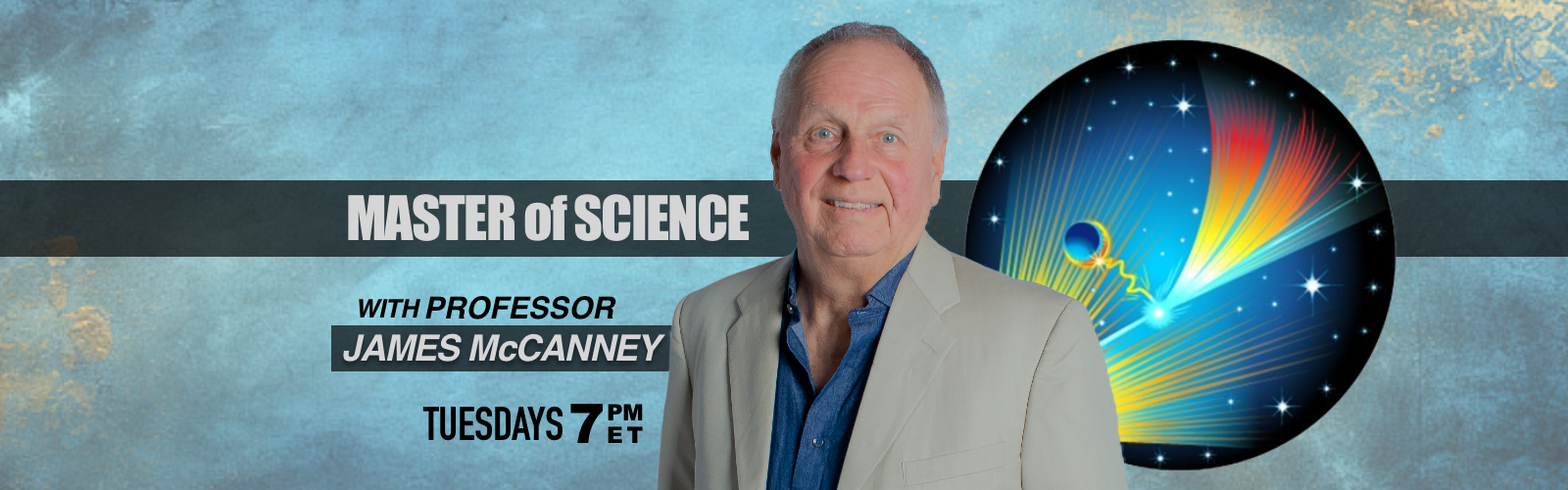
James M. McCanney
Keynote SpeakerJames M. McCanney, M.S. is an independent researcher, scientist, entrepreneur, and founder of JMCCanneyscience® LLC and JMCC WING® LLC. With extensive experience in applied science, engineering principles, and interdi...
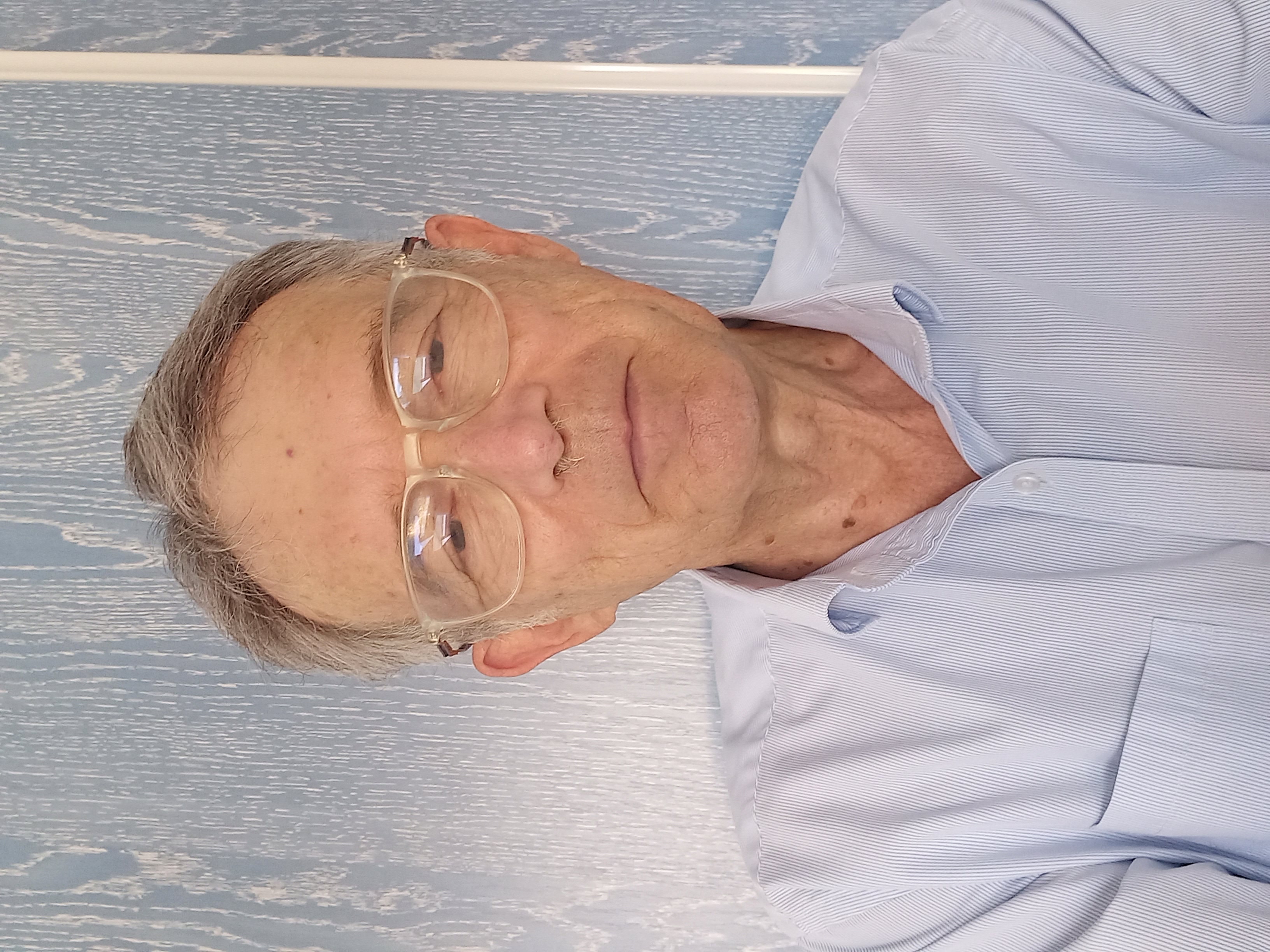
Bernard Guy
Session SpeakerBernard Guy is a French scientist and Emeritus Professor from Mines Saint-Etienne, Institut Mines Télécom. A graduate of the École des Mines (Paris, 1971), he holds multiple doctoral degrees: Docteur ingénieur, Ingéni...

Gopinath Guin
Session SpeakerGopinath Guin is a PhD researcher at the S. N. Bose National Centre for Basic Sciences, Kolkata, specializing in theoretical high-energy physics and early-universe cosmology. His research interests include cosmology,...
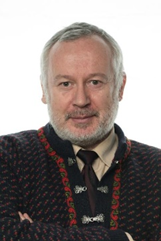
Igor Edmundovich Bulyzhenkov
Session SpeakerDr. Igor E. Bulyzhenkov (ORCID: 0000-0003-3835-0973) is a condensed matter theorist who develops the nonlocal geometrodynamics of massive fields with correlated Shannon information in holistic self-organizing systems...
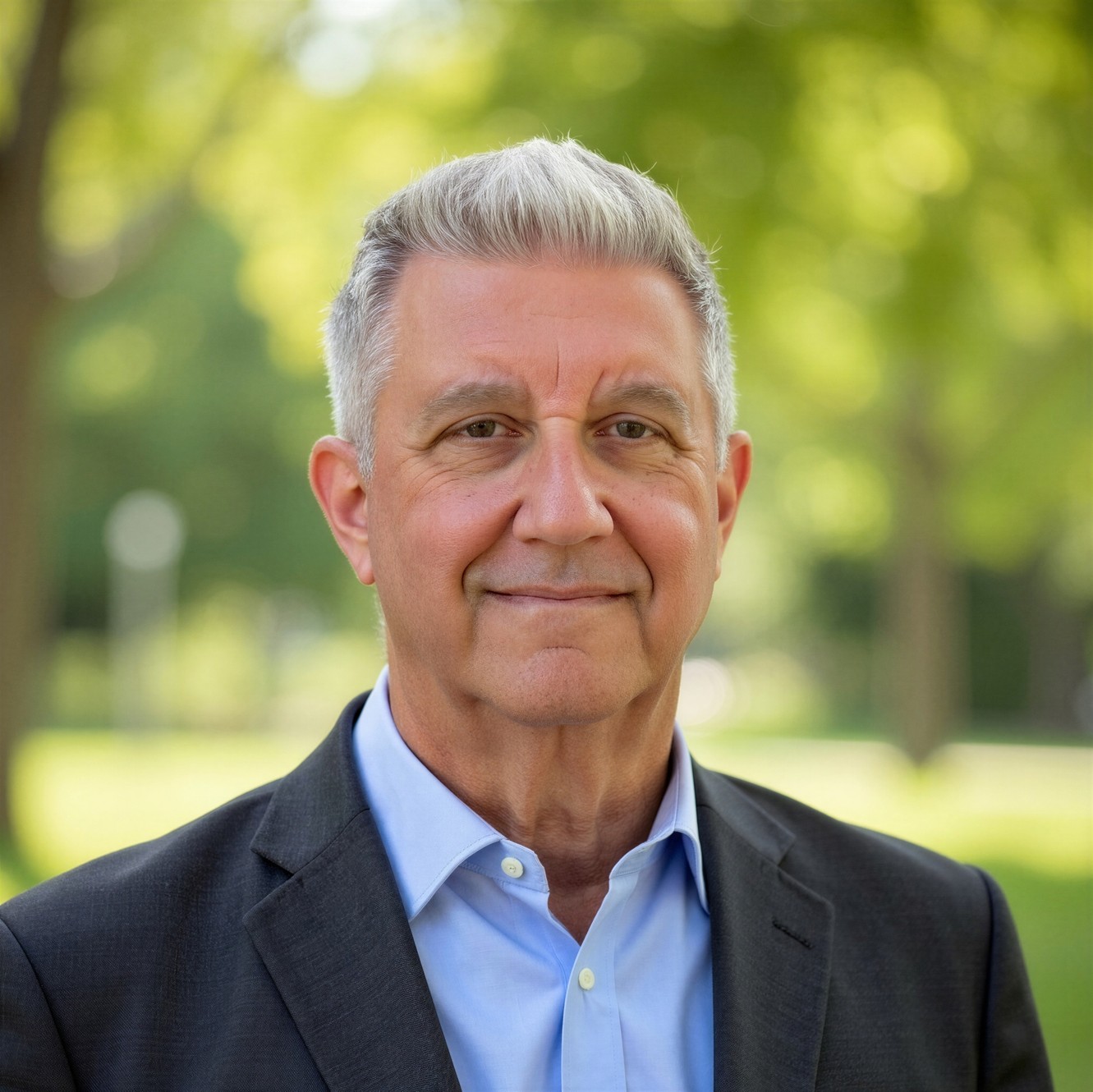
Jeffrey Cleveland
Session SpeakerJeffrey Cleveland is an economics lecturer and Ph.D. candidate in Space Resources Economic Policy at the Colorado School of Mines, where he is an adjunct professor in the economics of space resources. A frequent confe...
Justin Rajakumar Maria Thason
Session SpeakerJustin Rajakumar Maria Thason is a senior technology leader with over 20 years of experience in software engineering, cloud architecture, and AI/ML system development. He has led global engineering teams and delivered...
Mahammad A. Nurmammadov
Session SpeakerMahammad A. Nurmammadov in present is Dr.Associated Professor, Lead scientific researcher of the Department of Theoretical Astrophysics and Cosmology after name N. Tusi Shamakhy Astrophysical Observatory of the Minist...

Miroslav Ilias
Session SpeakerMiroslav Iliaš is a theoretical chemist and computational physicist specializing in relativistic quantum chemistry, computational molecular physics, and the electronic structure of heavy and superheavy elements. He is...
Nasir Ali
Session SpeakerNasir Ali is a quantum hardware–software infrastructure engineer specializing in FPGA- and GPU-accelerated quantum computing systems. He works on real-time quantum error correction (QEC), quantum simulation, and contr...
Samuel McKee
Session SpeakerSamuel McKee is a biomedical scientist researching DNA repair in cancer and space science contexts at the University of Reading. He has a doctorate in history and philosophy of science on interwar physics from Manches...

Xiao En Wang
Session SpeakerXiao En Wang’s research focuses on interdisciplinary fundamental theoretical studies bridging quantum mechanics, atomic physics, and cosmology. His work explores the nature of photon wave–particle duality, advanced at...
Organizing committee members

SURAIYA SULTANA
OCMMiss Suraiya Sultana is a recent graduate in Electrical and Electronic Engineering from Varendra University, Bangladesh, with a CGPA of 3.89/4.00. Her research interests include smart grids, microgrids, power systems,...

Dr. Rawaa Ahmed Faris Al-Saaday
OCMDr. Rawaa Ahmed Faris Al-Saaday is an Assistant Professor at the University of Baghdad – Institute of Laser for Postgraduate Studies and an Editorial Board Member of PLOS ONE. With over 15 years of academic and rese...
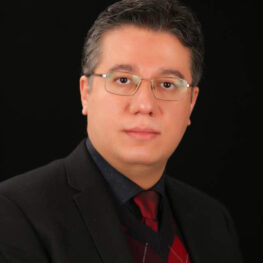
Alireza Heidari
OCMProf. Dr. Alireza Heidari, Ph.D., D.Sc., is a Full Distinguished Professor of Chemistry and Enrico Fermi Distinguished Chair in Molecular Spectroscopy at California South University (CSU), Irvine, USA. He holds Ph.D....
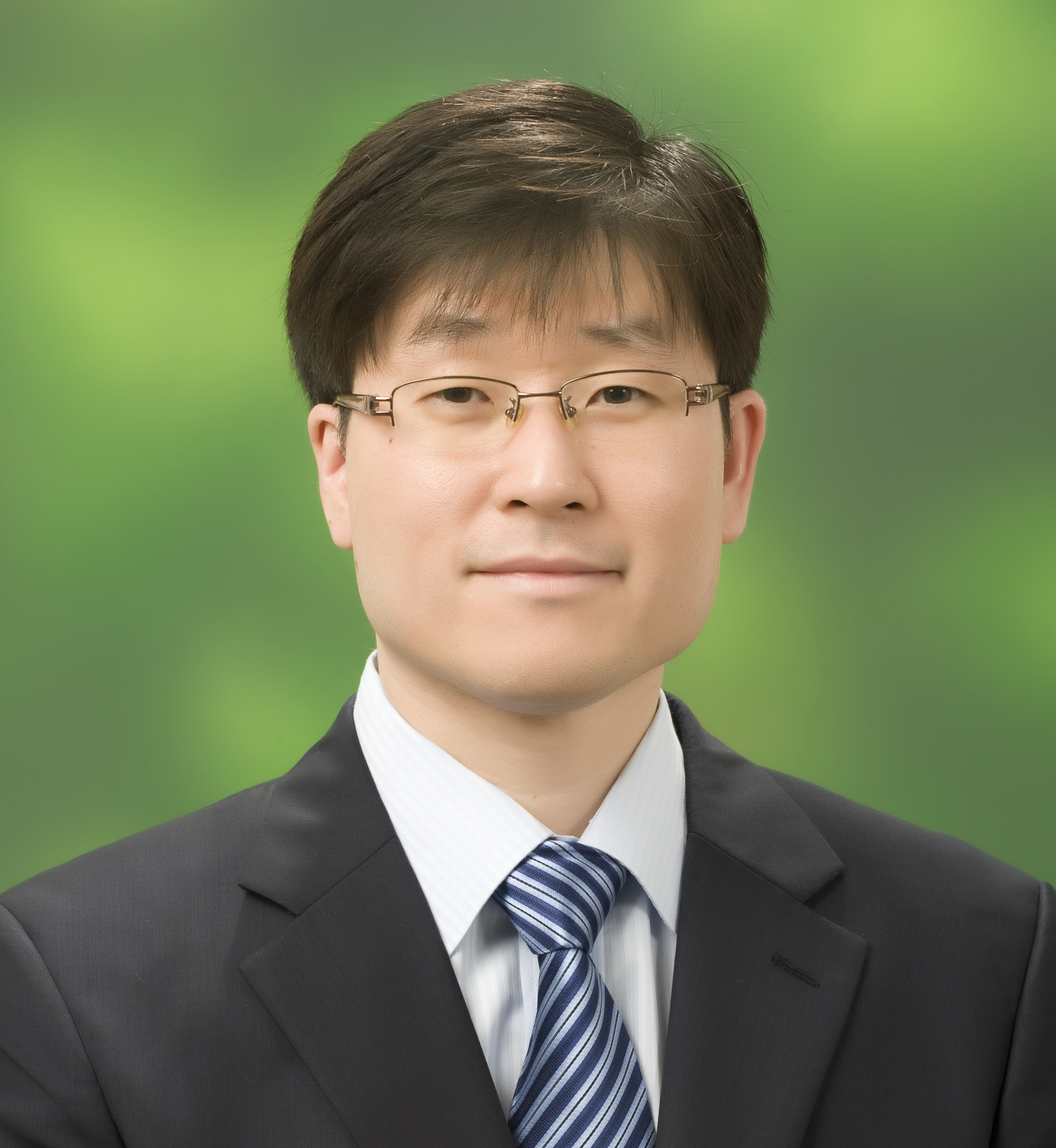
Bong Joong Kim
OCMDr. Bong-Joong Kim is a Professor in the School of Materials Science and Engineering at the Gwangju Institute of Science and Technology (GIST), South Korea, where he also served as Dean from 2023 to 2025. His research...

Taukir Ahmed
OCMMd. Taukir Ahmed is an Electrical and Electronic Engineering graduate from Varendra University, Rajshahi, with a strong academic background (CGPA: 3.85/4.00) and research experience in Smart Grid, Microgrid, Energy Sy...
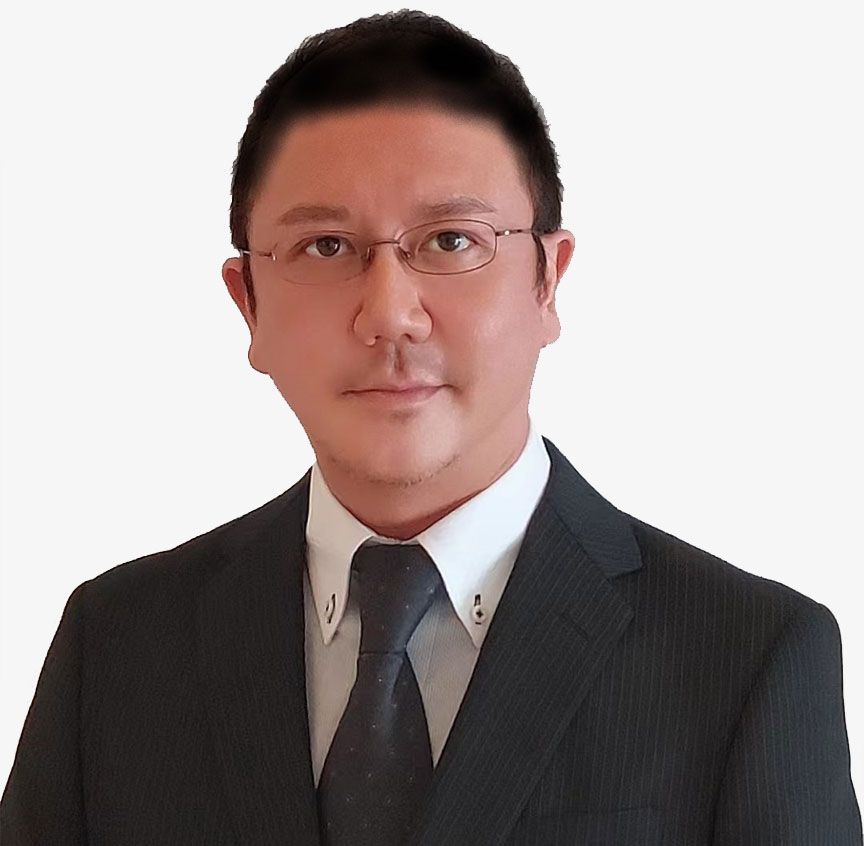
Yew Kee Wong
OCMYew Kee WONG (Eric) is a former Professor, Associate Vice-President, and Registrar at Hong Kong Chu Hai College. He has previously served as a Professor at BASIS, Jiangxi Normal University, and Huanghuai University. H...
Virtual
Nearby attractions will be added soon.
Quantum Universe 2026: Quantum Science, Astrophysics & Fundamental Physics
contact@srcmeetings.com
For registration, abstract submission, speaker participation, or venue coordination, email our support team or submit your query through the online contact form.