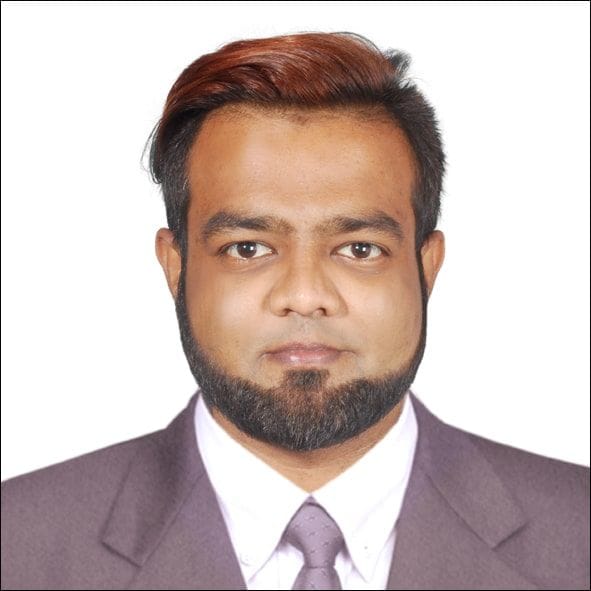
MOHAMMED JALALUDDIN
Session Speaker
Mohammed Jalaluddin is an Assistant Professor in the Department of Civil Engineering at Lords Institute of Engineering and Technology (Autonomous), Hyderabad, with over a decade of experience in teaching, research, and academic administration. He holds a Master's degree in Transportation Engineering from Osmania University and an M.Sc. (Research and Advanced Practice) in Project Management from Teesside University, UK, and is currently pursuing a Ph.D. at Guru Ghasidas Vishwavidyalaya. His research interests include transportation engineering, environmental engineering, sustainable construction, waste management, remote sensing & GIS, and construction project management. He has published more than 70 research papers, authored book chapters, filed patents, and presented his work at numerous national and international conferences, with research recognized by institutions including the University of Oxford and Budapest University. A recipient of the Telangana Best Researcher Award (2025) and several teaching and research excellence awards, he is actively involved in mentoring students, coordinating research initiatives, and promoting sustainable engineering practices.
Climate Change and Aquatic Ecosystems: Impacts, Challenges, and Sustainable Management Strategies: Climate change has become one of the most significant environmental challenges affecting aquatic ecosystems worldwide. Rising temperatures, altered precipitation patterns, increased frequency of extreme weather events, and sea-level rise have substantially influenced freshwater and marine ecosystems. These changes affect water quality, biodiversity, ecosystem productivity, and socio-economic systems dependent on aquatic resources. This paper reviews recent literature on climate change impacts on aquatic ecosystems, presents a conceptual methodology for impact assessment, discusses observed environmental changes, and proposes sustainable adaptation and mitigation strategies. The findings indicate that integrated water resource management, ecosystem restoration, climate-resilient infrastructure, and advanced monitoring technologies are essential for preserving aquatic ecosystem health under changing climatic conditions. Keywords: Climate Change, Aquatic Ecosystems, Water Quality, Biodiversity, Wetlands, Sustainability, Water Resources.