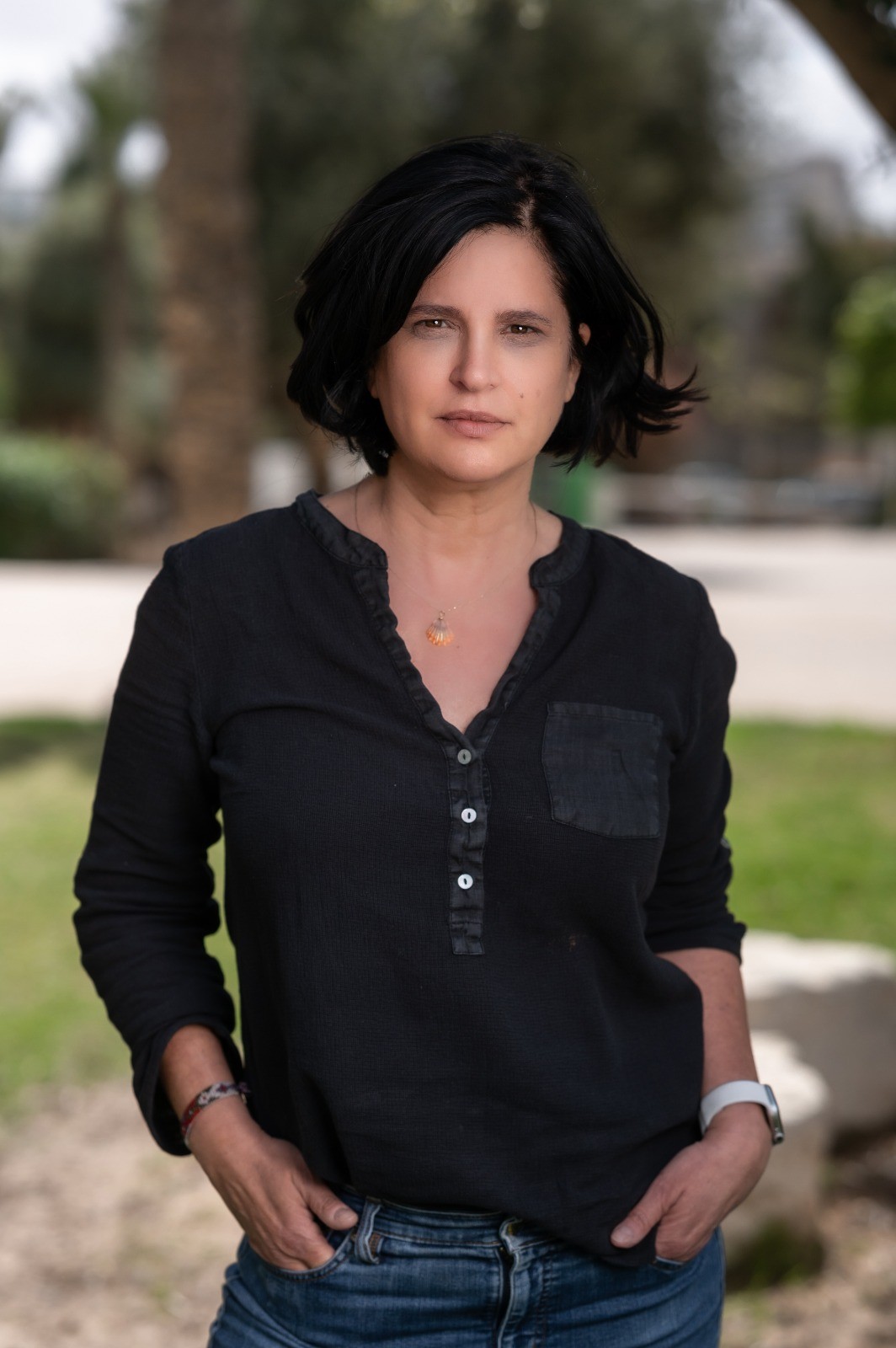
Sigal Abramovich
Session Speaker
Prof. Sigal Abramovich is the Dean of the Faculty of Natural Sciences and a Full Professor in the Department of Earth and Environmental Sciences at Ben-Gurion University of the Negev, Israel. Her research focuses on large benthic foraminifera, marine ecology, symbiosis, climate change, biological invasions, and paleoceanography. She has published extensively in leading international journals, including Science Advances, PNAS, Nature Communications, and Science of the Total Environment, and serves as Israel's representative to the Scientific Committee on Oceanic Research (SCOR) and the International Union of Geological Sciences (IUGS).
From Symbiosis to Biological Invasions: Large Benthic Foraminifera as Bioindicators of a Changing Ocean Large benthic foraminifera (LBF) are among the most prolific carbonate producers in tropical and subtropical seas, contributing substantially to reef sediment production and serving as sensitive indicators of environmental change. As photosymbiotic holobionts, their ecological success depends on complex interactions between the foraminiferal host, photosynthetic microalgae, and diverse prokaryotic microbial communities. Understanding how these multipartite symbioses respond to environmental stress is becoming increasingly important as marine ecosystems experience rapid warming and biological redistribution. This presentation will highlight how LBF provide a powerful model system for investigating the mechanisms underlying resilience, adaptation, and biological invasions in a changing ocean. I will present recent advances integrating field ecology, molecular biology, microbiome research, single-cell genomics, and geochemical proxies to disentangle the relative contributions of host genetics, symbiont identity, and microbiome function to organismal performance. Particular emphasis will be placed on the remarkable Lessepsian invasion from the Red Sea into the Eastern Mediterranean, which represents a natural experiment for understanding how marine calcifiers successfully colonize novel environments. Recent findings suggest that invasion success cannot be explained by host traits alone but emerges from the adaptive capacity of the entire holobiont. By examining native Red Sea populations alongside established Mediterranean populations, we can investigate how symbiont flexibility, microbial community composition, and physiological plasticity contribute to thermal tolerance, ecological success, and resilience under climate change. These multidisciplinary approaches provide new insights into the functional role of microbial partners in marine calcifiers and establish large benthic foraminifera as emerging model organisms for predicting ecosystem responses to global warming. Beyond their value as paleoenvironmental archives and ecological indicators, LBF offer a unique opportunity to understand how symbiosis shapes adaptation and determines the future resilience of coral reef ecosystems in an increasingly changing ocean.